Discover how a booking engine can help you increase your revenue and reduce commissions.
The MiniHotel PMS, integrated with a booking engine, is the perfect ally to implement this strategy and achieve more complete management, optimizing your website to capture as many direct bookings as possible. Discover our booking engine.
Booking engine: how it can help you increase your revenue
A booking engine on your website helps eliminate the friction that can arise at the time of confirming a reservation. Confusing information or details outside the hotelier’s control can cause a booking to be forgotten in the cart and never completed. Reducing the number of clicks required to complete the process may seem like a small change, but it represents a decisive improvement in the user experience. Having a tool that complements your external channels and provides a direct alternative from your own website is the first step to maintaining control over the moment the guest makes a reservation.
While the main value of a booking engine is to reduce dependency on reservations managed and commissioned by online travel agencies, having a well-structured offer on your own website not only drives direct bookings but also allows you to implement upselling strategies that increase the average value of each stay and enhance the guest experience.
A booking engine allows you to offer special packages, exclusive benefits, or personalized promotions that enhance both the average value of each stay and the overall guest experience. This translates into greater loyalty and increases the likelihood that these guests will book again in the future, strengthening the direct relationship with your brand.
Key aspects to consider when choosing a booking engine
Technical and essential factors such as synchronization, functionality, and customization are critical when choosing a booking engine.
First of all, it is essential that the system does not slow down your website’s loading speed. A heavy or poorly optimized booking engine can directly affect your conversion rate and SEO performance, reducing visibility and the commercial results of your property.
Secondly, and no less importantly, the booking engine must synchronize instantly across mobile devices. Today, more than 50% of hotel website traffic comes from smartphones, so offering a fast and mobile-friendly experience is essential to guarantee bookings.
In addition, to enhance upselling strategies and special promotions, it is advisable to choose a booking engine that allows you to manage multiple rates and personalized offers, making it easier for guests to access additional services and improving their overall experience.
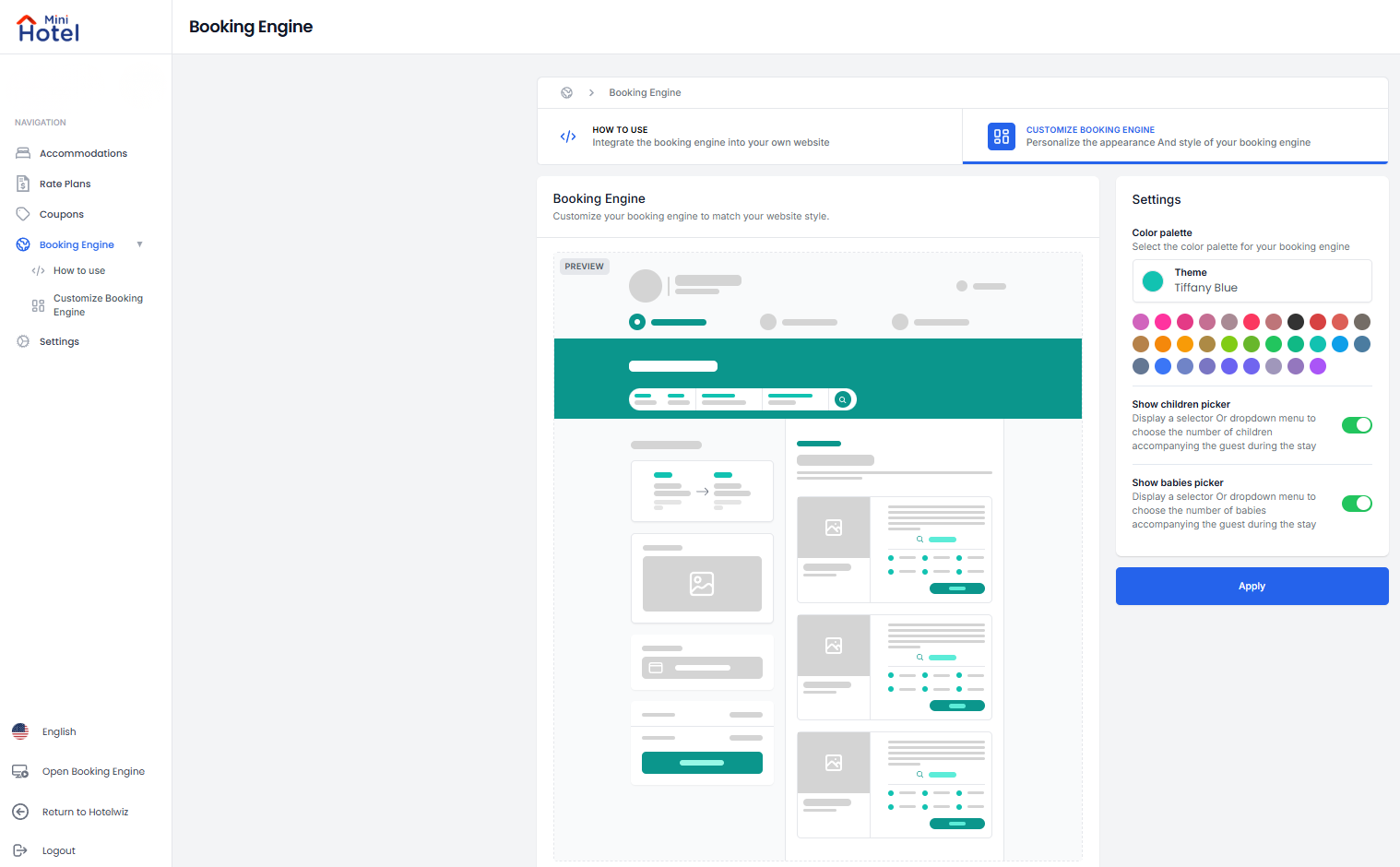
Finally, maintaining aesthetic and visual consistency with your website is key to creating a strong first impression. Choosing a customizable booking engine that integrates seamlessly with your site’s design helps strengthen your property’s visual identity.
Frequently asked questions about booking engines
How does the loading speed of the booking engine impact results?
A fast booking engine improves the user experience and increases the chances of completing a reservation. Various studies show that every extra second in loading time can reduce conversion rates and negatively affect the site’s SEO performance.
How important is mobile optimization?
It’s essential. More than half of all hotel website traffic comes from smartphones. If your booking engine isn’t properly optimized for mobile, users are likely to abandon your site and book through an OTA instead, reducing the direct profitability of your Google Ads or PPC campaigns.
What features help improve conversion rates?
The most advanced booking engines include tools such as dynamic pricing, geo-targeted segmentation, rate comparison modules, and widgets showing real-time availability. These functions create urgency and trust — key factors for increasing your conversion rate.
What is the average conversion rate for a hotel booking engine?
It depends on the type of property, the quality of the website, and the overall digital strategy, but on average it ranges between 2% and 5%. With an optimized booking engine and solid integration with your PMS and Channel Manager, it’s possible to easily exceed that range and boost your return on investment.
👉 See how it works