How to improve your hotel’s social media strategy in 2026
Social media is no longer just a source of travel inspiration. Today, it plays an active role in the booking decision process, influences brand perception, and can directly impact reservations.
For hotels, hostels, and tourist accommodations, a well-defined strategy helps increase visibility, stand out from competitors, and build a closer relationship with guests even before they arrive at the property.
In this article, we explore how to build an effective social media strategy based on hospitality best practices and adapted to today’s market landscape.
Social media strategy for hotels: the role of social platforms in hospitality marketing
More than 55 percent of travelers spend between 30 and 120 minutes per day on social media. At the same time, a large share of them acknowledge that a post influenced their choice of destination or accommodation.
This makes social media a key touchpoint throughout the guest journey. Inspiration begins there, comparison follows, and in many cases, the final booking decision is made.
Over time, communication styles have also changed. Perfect images gave way to more authentic content, where values, real experiences, and proximity matter more than polished aesthetics.
Social media strategy for hotels: the most relevant platforms
Each platform plays a different role within a hotel’s digital strategy.
- Instagram and TikTok: reach and inspiration through short-form video.
- Facebook: messaging, community management, and paid campaigns.
- YouTube: long-form informational content such as property tours and explanations.
- LinkedIn: brand positioning, employer branding, and commercial partnerships.
It is not necessary to be present on every platform. The key is identifying where your guests interact and managing those channels consistently.
Social media strategy for hotels: objectives
A strong strategy does not focus on a single outcome. Instead, it combines multiple goals that reinforce one another, including:
- Increasing direct bookings
- Strengthening brand identity
- Improving online visibility
- Providing guest support
- Building trust and reputation
Social media does not replace other sales channels. Instead, it complements the hotel’s entire digital ecosystem.
The value of driving direct bookings
One of the biggest challenges in the hospitality industry is reducing dependency on OTAs.
Social media allows hotels to drive traffic to their website, promote their direct booking engine, and build a direct relationship with guests without intermediaries or commissions.
- Clear links to your website
- Visible calls to action
- Messaging aligned with your direct sales strategy
Hotel brand building
A brand goes far beyond a logo. It includes tone of voice, visual identity, the experience being promised, and the type of guest you want to attract.
Social media should reflect that identity consistently. An urban hostel, a corporate hotel, and a nature lodge should not communicate in the same way.
When the brand is clear, content stops being generic and begins to create recognition.
Social media as a guest communication channel
More and more travelers use Instagram or Facebook as their first point of contact.
Responding quickly, maintaining a professional tone, and routing messages correctly are all part of the guest experience even before check-in.
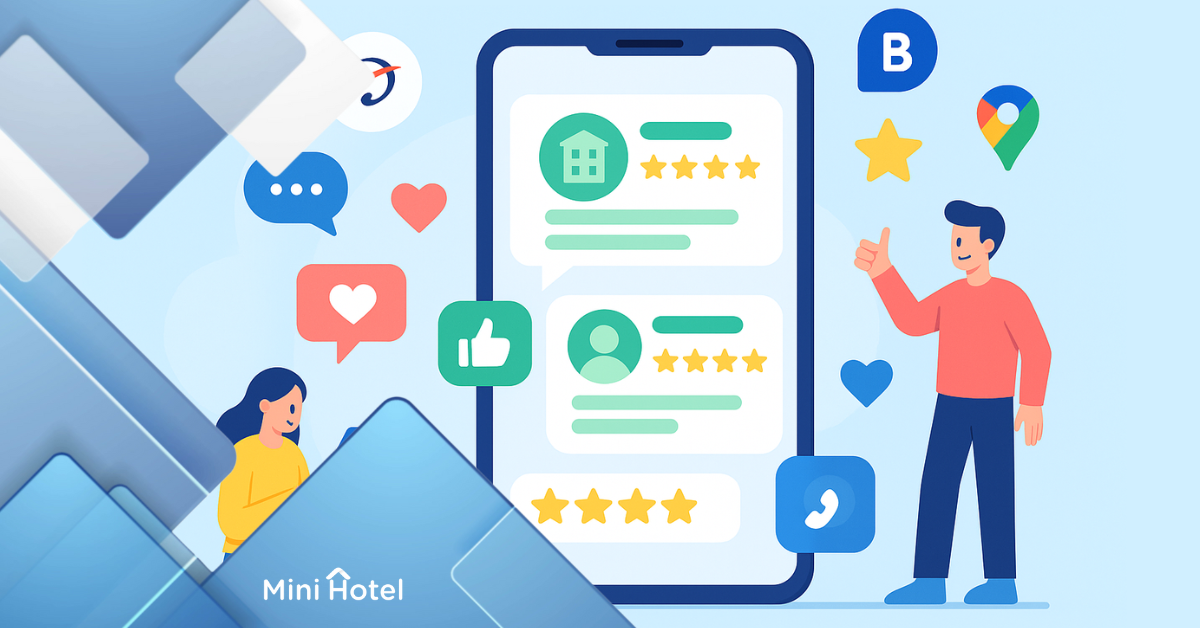
It is also essential to monitor and respond to reviews on Google and Tripadvisor, as many booking decisions depend on them. Positive reviews can also be reused as content to reinforce trust.
Social media strategy for hotels: what type of content performs best
Not everything should be promotional. A balanced strategy combines multiple content formats.
- Hotel informational content such as rooms, services, or common areas
- Real guest reviews and testimonials
- User-generated content from travelers
- Destination highlights and nearby activities
- Seasonal promotions and special dates
Maintaining balance between these content types keeps audiences engaged without overwhelming them.
Social media strategy for hotels: frequency and consistency
Posting every day is not always necessary. What truly matters is consistency.
Choosing one or two main platforms, defining a sustainable posting frequency, and maintaining it over time usually delivers better results than trying to do everything at once.
Planning content two or three months ahead makes it easier to evaluate performance and adjust strategy.
How to measure results
Metrics help determine whether your efforts are delivering real results. Some of the most relevant include:
- Engagement levels on posts
- Reach and impressions
- Website traffic
- Conversions and bookings
Using tracked links makes it possible to identify which content drives real business impact.
Social media strategy for hotels: best practices
Over time, the hospitality industry has consolidated several best practices that consistently deliver results:
- Prioritize video content
- Maintain visual consistency
- Communicate authentic values
- Use hashtags strategically
- Collaborate with local businesses
- Continuously test and optimize
Social media does not reward perfection. It rewards consistency and adaptability.
Building a strong social media strategy means taking action, analyzing results, and continuously adjusting direction. Today, more tools and data are available than ever, making it easier to understand what content works, on which platforms, and at what moments.
If you are just getting started, focus on the essentials. And if you already have experience, it is always a good time to explore new formats or platforms such as video, audio, articles, or interactive content.