Guide · PMS
Hotel Management Software for Small Hotels: 9 Must-Have Features and Market Options
Choosing the wrong system costs time and bookings. This guide covers what features matter, what types of systems exist, and what options the market offers for small independent properties.
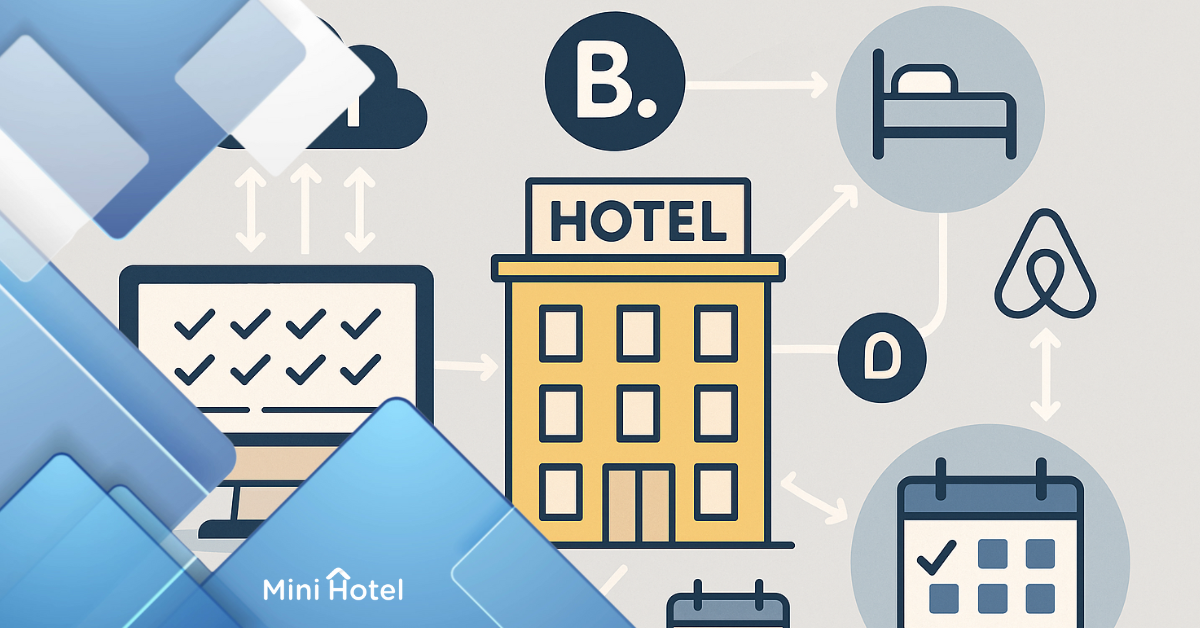
Hotel management software for small hotels is the platform that centralizes daily operations: reservations, availability, check-in, invoicing, and distribution across online sales channels. Also known as a PMS — or Property Management System — it replaces scattered spreadsheets and manual updates with a single source of control. For a small hotel, hostel, or independent accommodation, the priority isn't enterprise-grade features — it's simplicity and control with a lean team.
What is a hotel PMS?
A PMS is the central system where staff manages day-to-day operations: reservations, check-in and check-out, availability and rates across sales channels, invoicing, and reporting.
Most modern PMS platforms are cloud-based rather than locally installed. They can be accessed from any device, update automatically, and require no on-site servers.
9 key features of hotel management software for small hotels
These are the features worth checking before you decide. Here's a quick overview first, followed by a detailed look at how each one works in a small operation.
Dashboard
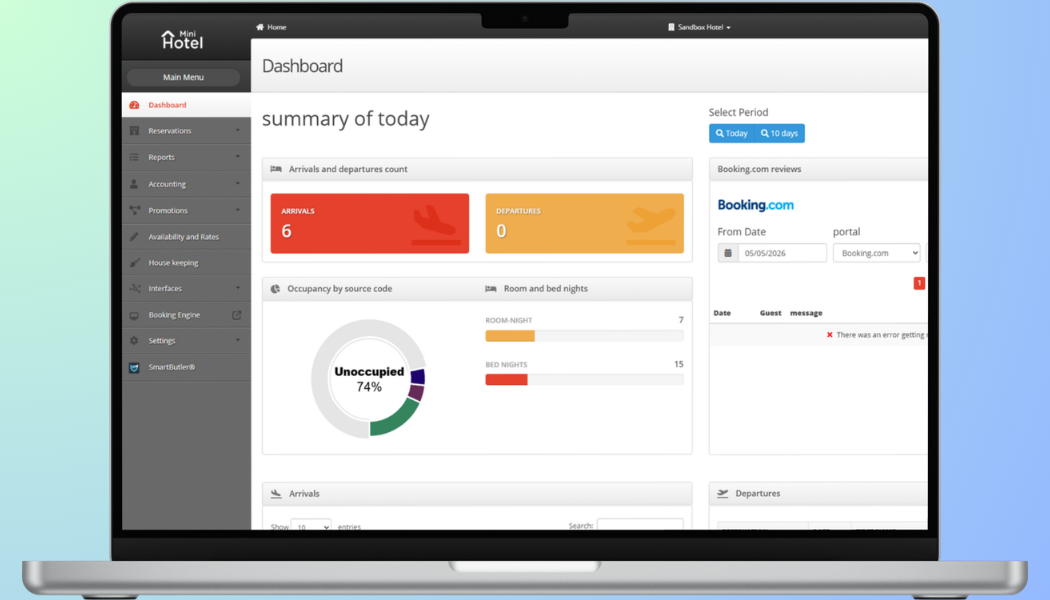
Critical daily information on a single screen: occupancy, arrivals, and departures.
Channel manager
Syncs availability and rates across OTAs in real time.
Reservation calendar
A clear view of availability with drag-and-drop booking management.
Booking engine
Direct bookings from your website, commission-free.
Automated check-in
Guest reception without on-site staff, 24/7.
Local invoicing
Tax-compliant receipts for the country you operate in.
Housekeeping
Organizes and assigns room preparation tasks to your team.
Reports
Occupancy, average rate, and revenue by channel at a glance.
Integrations
Add tools based on your property's specific needs.
1. Dashboard
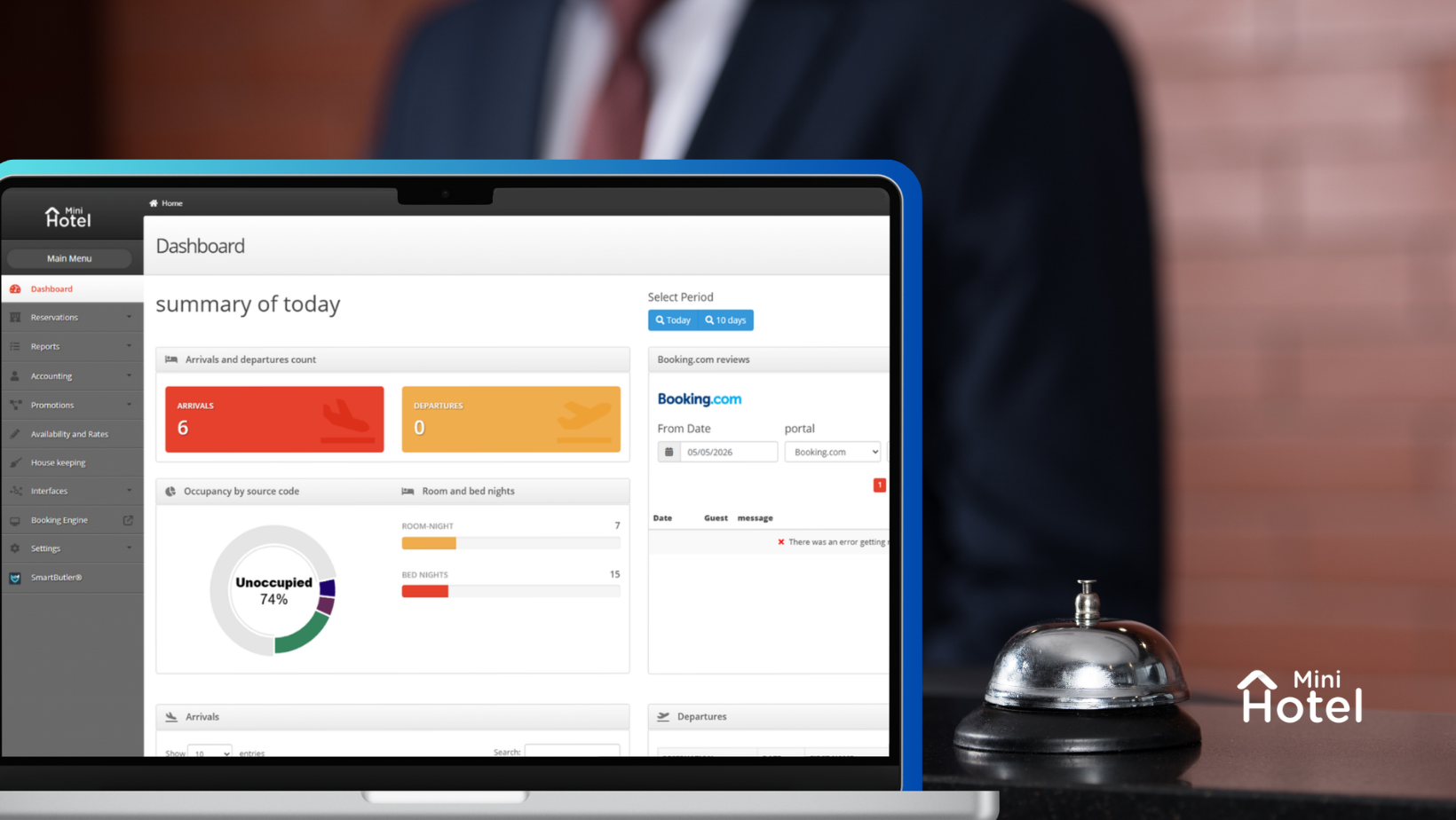
When you open the system, the first thing you should see is a clear dashboard with the day's critical information: occupancy, arrivals, departures, and room status. It's what allows quick decisions without digging through multiple screens.
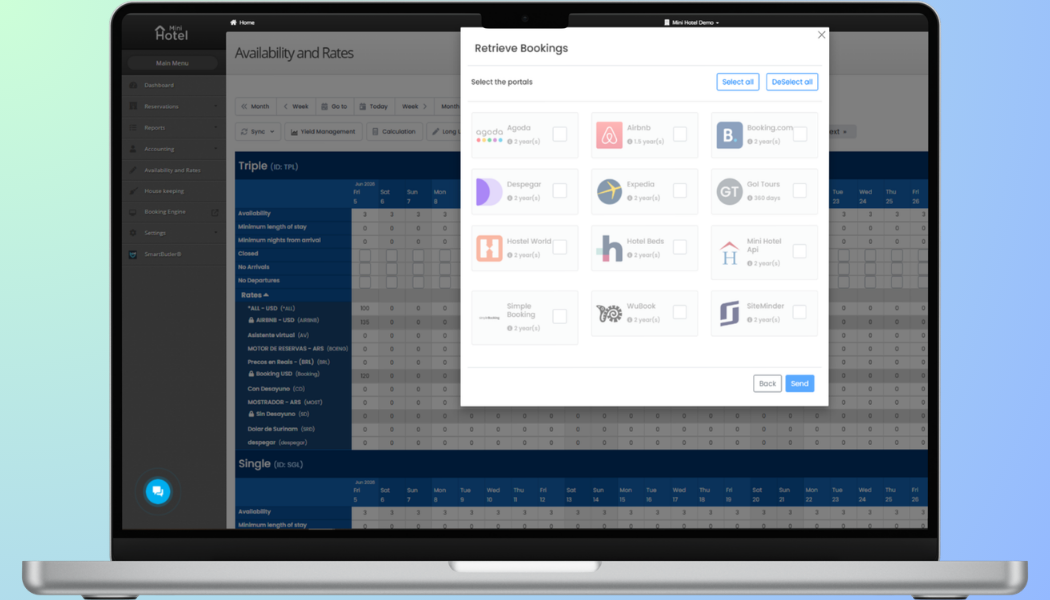
2. Integrated channel manager
The channel manager syncs availability and rates with online sales channels in real time. When a booking comes in on one channel, it's automatically blocked on all others. This is what prevents overbookings and eliminates the need to manually update rates on each portal.
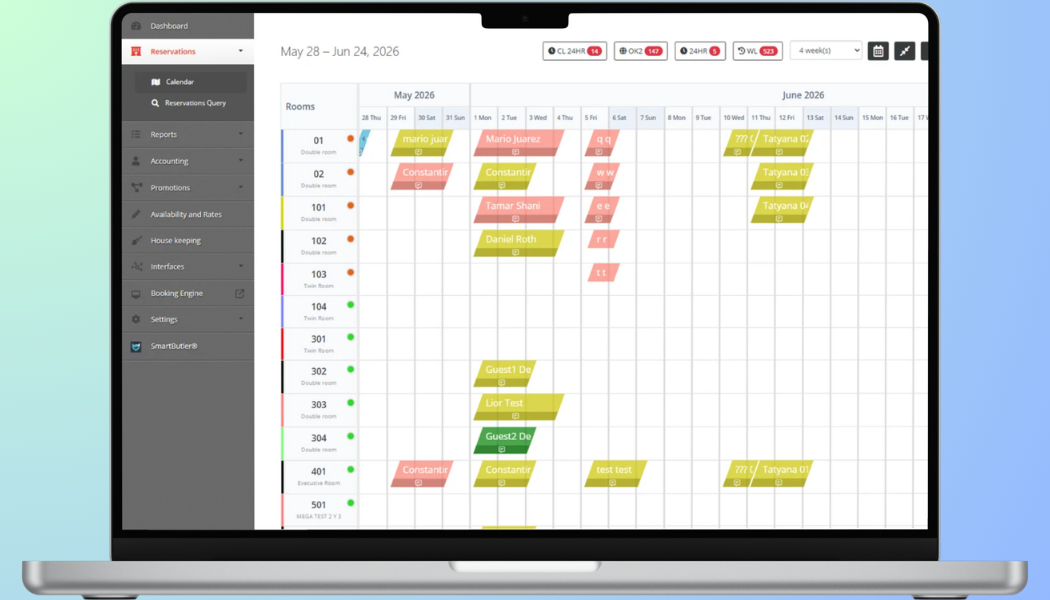
3. Reservation calendar
An interactive calendar lets you see availability at a glance and move bookings directly on-screen, with a clear view of room status. Compared to a spreadsheet, it makes hidden availability visible.
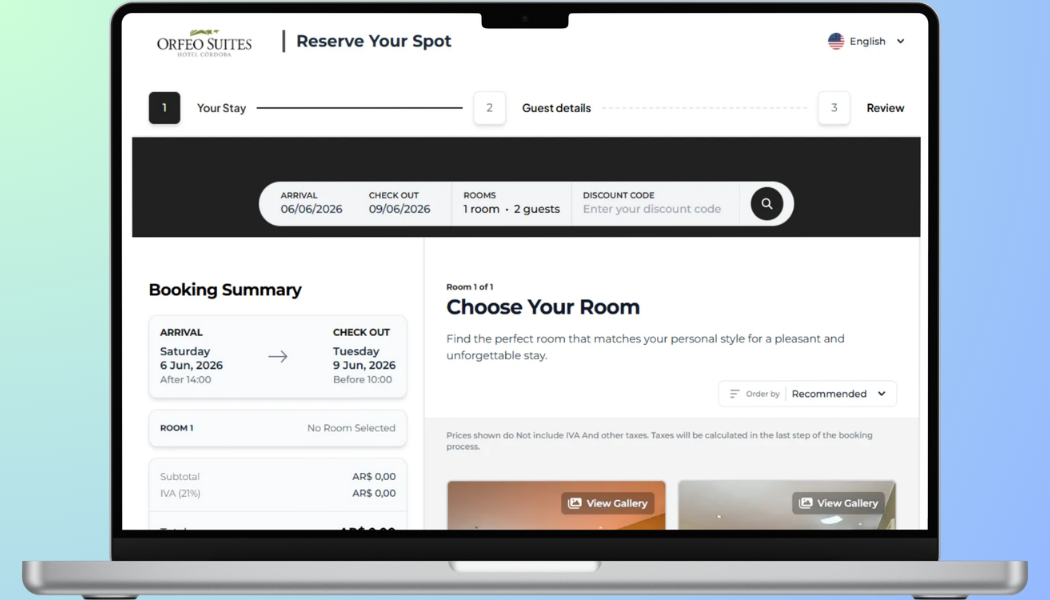
4. Commission-free booking engine
The booking engine receives direct reservations from your property's website, with no intermediary commissions. Every direct booking is revenue that stays with you.
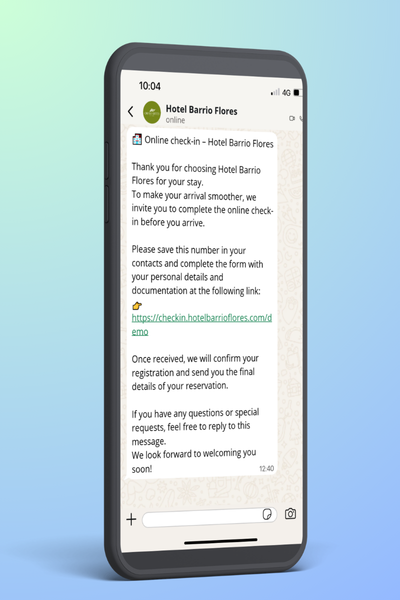
5. Automated check-in and check-out
Automating check-in reduces front desk workload and allows you to receive guests without on-site staff. It's especially useful for hostels and properties without a permanent reception.
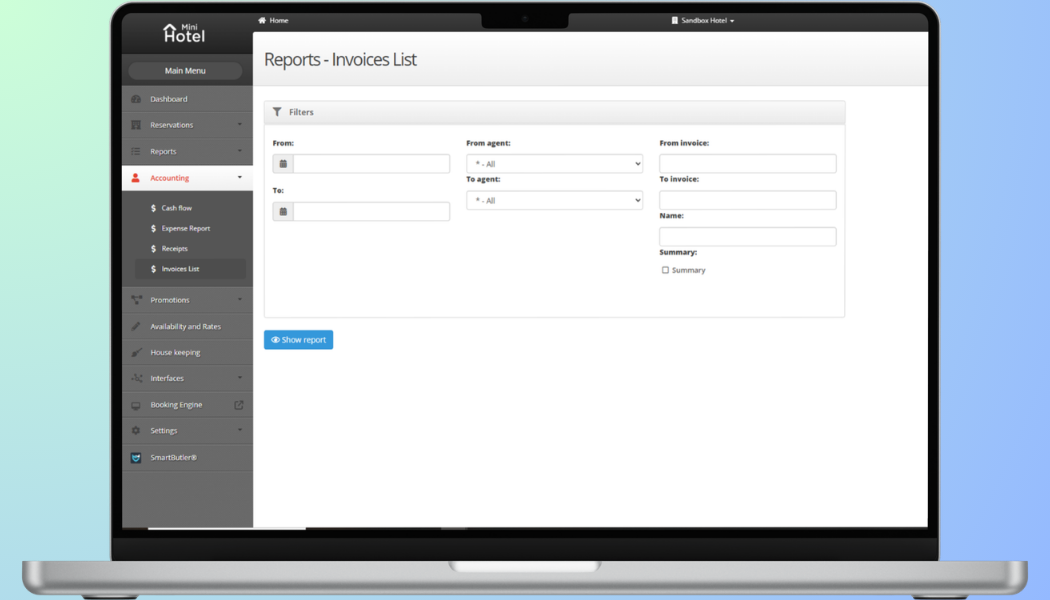
6. Invoicing and tax compliance
The system should issue receipts that comply with the tax regulations of the country you operate in. A PMS with built-in local invoicing saves you from duplicating work in a separate tool.
7. Housekeeping
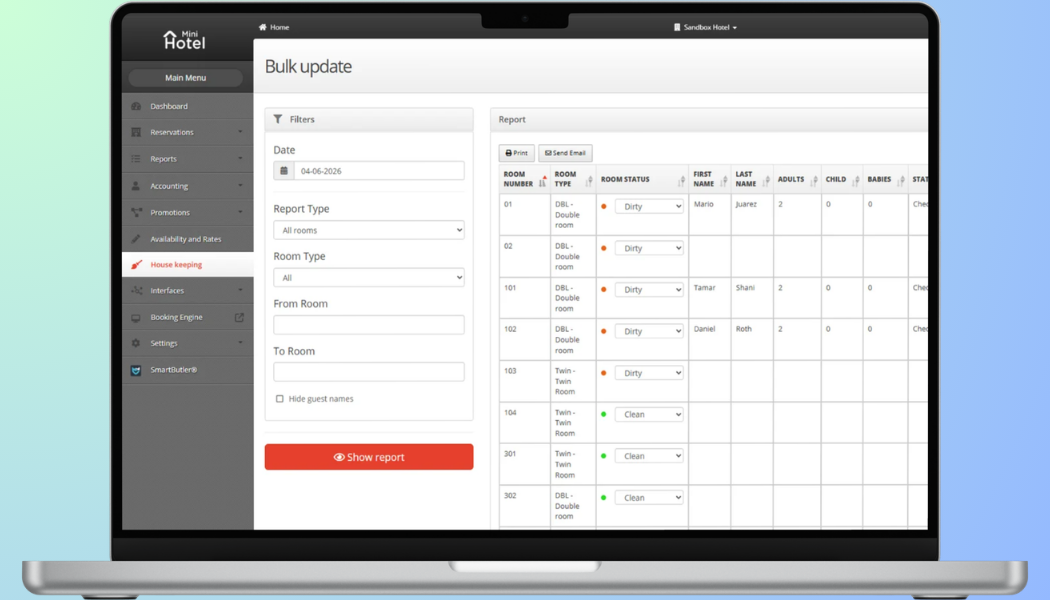
The housekeeping module organizes which rooms need to be prepared before each arrival and lets you assign tasks to staff. It keeps operations coordinated without separate spreadsheets.
8. Reports
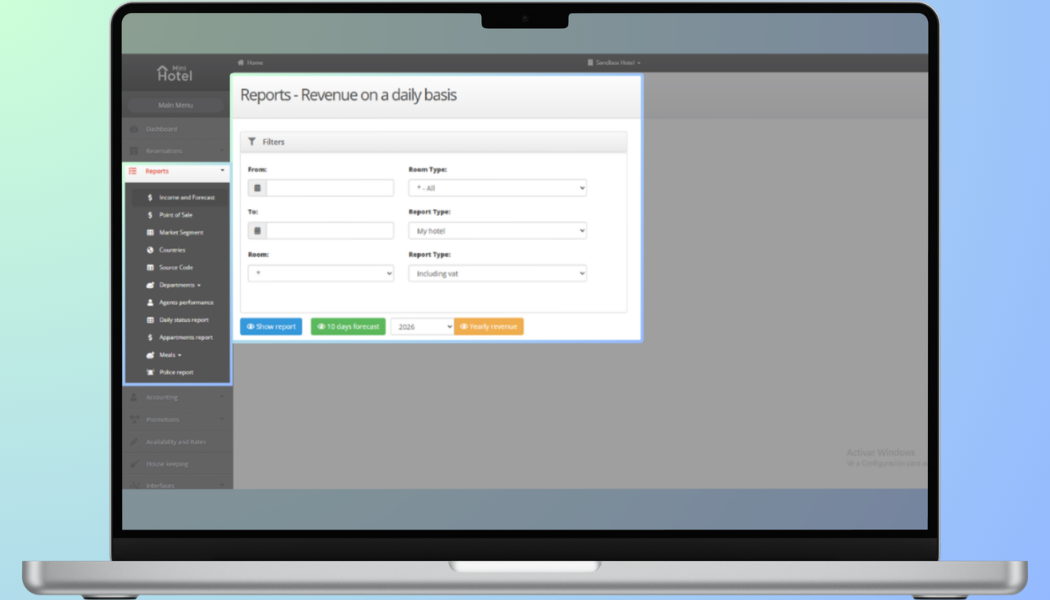
Occupancy, average rate, and revenue by channel. You don't need advanced analytics, but having the key numbers at hand is essential for pricing and distribution decisions.
9. Integrations
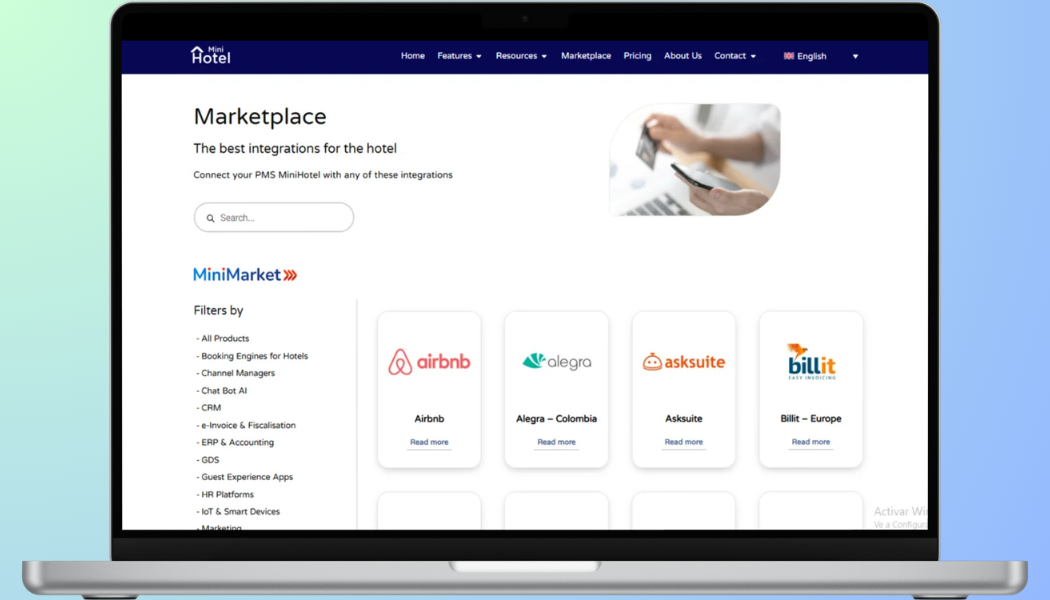
An integrations marketplace lets you add tools based on your property's needs: smart locks, online payments, CRM, smart TV, and more.
Types of hotel management software for small hotels
When evaluating hotel management software for small hotels, systems differ not just in features but in how they're delivered, how they charge, and how much commitment they require. Five distinctions to keep in mind:
Cloud vs. on-premise
Cloud-based systems are accessible anywhere, update automatically, and require no local servers.
All-in-one vs. separate tools
An integrated system avoids coordinating multiple vendors, plans, and support teams.
Commission vs. flat fee
Some charge per booking; others a monthly subscription. Calculate total cost before deciding.
24/7 vs. ticket-based
Without an IT team, responsive support in your language matters as much as features.
Lock-in vs. no lock-in
Some require minimum terms and auto-renewal; others let you cancel anytime.
This last distinction is often overlooked and can be the most binding. Many PMS contracts combine a minimum term of 12, 24, or 36 months with automatic renewal and early termination penalties. The problem surfaces when you want to switch: you often have to pay for the old system and the new one in parallel until the contract expires.
Before signing, check three things: whether there's a mandatory minimum term, whether renewal is automatic and how much notice is required, and what penalty exists for early cancellation. A system with no lock-in lets you decide whether to stay at any point.
Market options for small hotels and hostels
These are hotel management software for small hotels options designed for independent properties and hostels. Descriptions are informational — each property should evaluate which one fits its operation.
MiniHotel
Cloud-based hotel management software for small hotels, hostels, and independent accommodations. It combines PMS, channel manager, commission-free booking engine, tax-compliant local invoicing, automated check-in, and housekeeping module in a single platform, with support in English, Spanish, and Portuguese.
Cloud-based PMS
Channel manager (400+ portals)
Commission-free booking engine
Local tax-compliant invoicing
Self check-in and check-out
Support in EN, ES, and PT
No lock-in contract
Free trial available
Want to see it in action? Request a free demo with your room count and the channels you already use.
Satisfaction guaranteed, no lock-in. MiniHotel requires no long-term contract. If you're not satisfied during onboarding, you get a full refund of your first month's payment.
Little Hotelier
Software by SiteMinder designed for small properties. Includes PMS, channel manager, booking engine, and mobile app, along with a third-party integrations marketplace.
Cloudbeds
Cloud-based platform that integrates PMS, channel manager, booking engine, revenue management tools, payment processing, and a third-party app marketplace.
RoomRaccoon
Cloud-based management system for independent properties. Offers PMS, online check-in, administrative automation, and third-party integrations.
Hotelogix
Cloud-based PMS for small and mid-size hotels. Features an online booking engine, channel manager, and mobile app.
Mews
Cloud-based hospitality platform with PMS, booking engine, revenue management system, payment processing, and a marketplace with 600+ third-party integrations.
eviivo
Integrated property management suite with online booking engine, channel manager, guest manager, and performance tools, with offices across seven countries.
Choosing on price alone. A cheap system that doesn't sync well with your sales channels can cost more in overbookings than what you save per month.
And if it doesn't handle your country's invoicing requirements, you'll end up running two tools in parallel.
How to choose hotel management software for small hotels, step by step
1. List your real needsRoom count, sales channels, self check-in, and your country's invoicing requirements.
2. Verify integrationsConfirm it connects with the portals and tools you already use.
3. Request a tailored demoWith your room count and your channels — not a generic walkthrough.
4. Test the supportSubmit a question during the trial and measure the response time.
5. Calculate total costMonthly fee, add-on modules, and commissions, if any.
Frequently asked questions
What is a hotel PMS?
It's the software that centralizes a property's management: reservations, availability, check-in, invoicing, and connection with online sales channels.
Does a small hotel or hostel need a PMS?
Yes — especially once you sell through more than one channel and manual updates start causing errors or taking too much time.
What's the difference between a PMS and a channel manager?
A PMS manages the property's internal operations. A channel manager syncs availability and rates with external portals. Ideally, the channel manager is built into the PMS.
Is a cloud PMS the right choice for a small property?
For a lean operation, it's usually the most practical option: no installation, no local servers, automatic updates, and access from any device.
What features are essential in hotel management software for small hotels?
In hotel management software for small hotels, the essentials are reservation management, integrated channel manager, booking engine, local invoicing, and support in the operator's language.
Try MiniHotel at your property
Manage reservations, channels, check-in, and invoicing from a single platform built for small hotels, hostels, and independent accommodations.
Request a free demoNo installation · 7-day free trial, no payment commitment · No lock-in contract · Satisfaction guaranteed